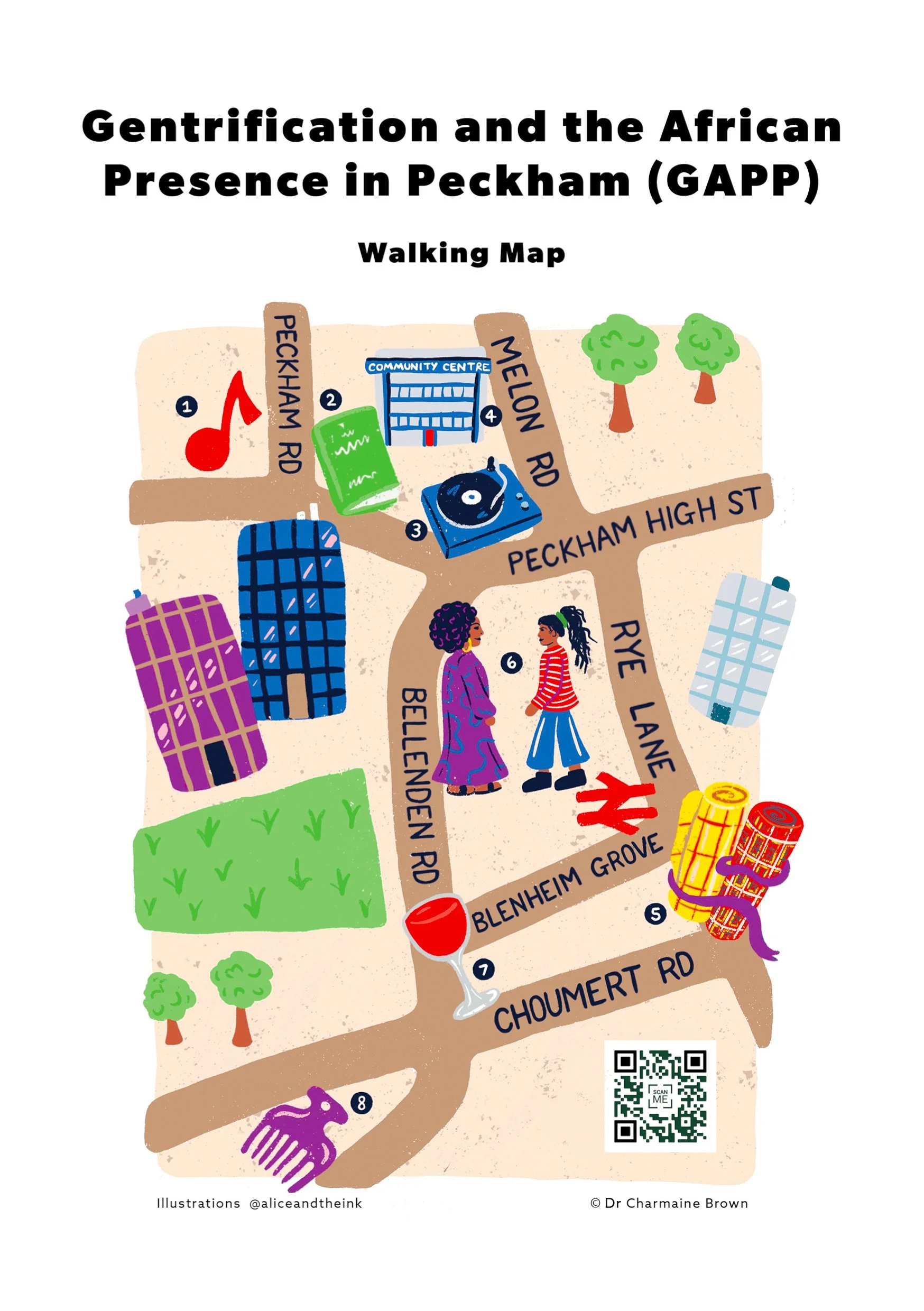
Gentrification and African Presence in Peckham (GAPP) walking tour
Black urban removal
Charmaine Brown
Background and rationale
I founded the Gentrification and African Presence in Peckham (GAPP) walking tour to promote historical spaces occupied by the Black community between 1960 and 1990. In 2023, walking tours supported the Rights in Focus conference[1]; the National Youth Theatre play Gone Too Far[2] and the University of the Arts London Portraits of Peckham exhibition[3].
Each historical space presents the Caribbean community as pioneers and trailblazers. The skills and knowledge which they brought to the UK as immigrants from the Windrush generation, leaves the community with an impactful heritage and legacy. Participatory research[4] shaped these walking tours. One of the most prominent methods for data collection is the Caribbean oral history tradition.
The pinnacle of the walking tour is identifying some of the educational, recreational, and cultural spaces which have shaped social and cultural capital[5] over a defined period of Peckham’s history. These are spaces familiar to the researcher (a Peckham resident) and informed by the narratives exchanged with participants during these research walks. The Livingmaps More-than-human Mappings conference walk provided additional context about the Caribbean community and their cultural practices established in Peckham.
The walking tours support my lectures on the theme and more importantly brings to life a phase in Peckham’s history which has not been documented nor credited by the community historians, historical societies, and experts documenting Peckham’s history in published articles and online sources, such as Beasley[6], and those produced in the South London Guide and by the Peckham Historical Society[7]. These local histories omitted reference to the Caribbean presence. Their narratives concentrate on the West African and other communities which settled in Peckham post-1990 when the Caribbean community had dwindled.
Walking Tours
The More-than-human Mappings conference walking tour started with a warm up quiz on Peckham’s history. Participants were encouraged to take notes which informed their evaluations of the walking tour. I shared my GAPP map (Appendix 1) to illustrate the eight sites to be visited.
All walking tours are structured in three sections: section 1 presents an overview of historical information on Peckham and factors which influenced Caribbean immigration; section 2 reviews the lived experiences of the Caribbean community and how they navigated their new environment; section 3 analyses the impact of the Caribbean community on social and cultural capital. It also explores the legacy of their entrepreneurship manifested in cottage industries and high street businesses. Audience participation is encouraged throughout the tour.
A selection of photographs depicts some sites visited during the walking tour for the More-than-human Mappings conference, The University of the Arts London, and the National Youth Theatre. All photographs taken follow British Educational Research Association (BERA) ethical guidelines for educational research (2024) in seeking the permission of participants and photographers to post the pictures. A summary of discussions at each location is incorporated.
Livingmaps Network More-than-human Mappings conference, 26th April 2025
Warwick Gardens, Lyndhurst Way entrance, SE15 5QA:
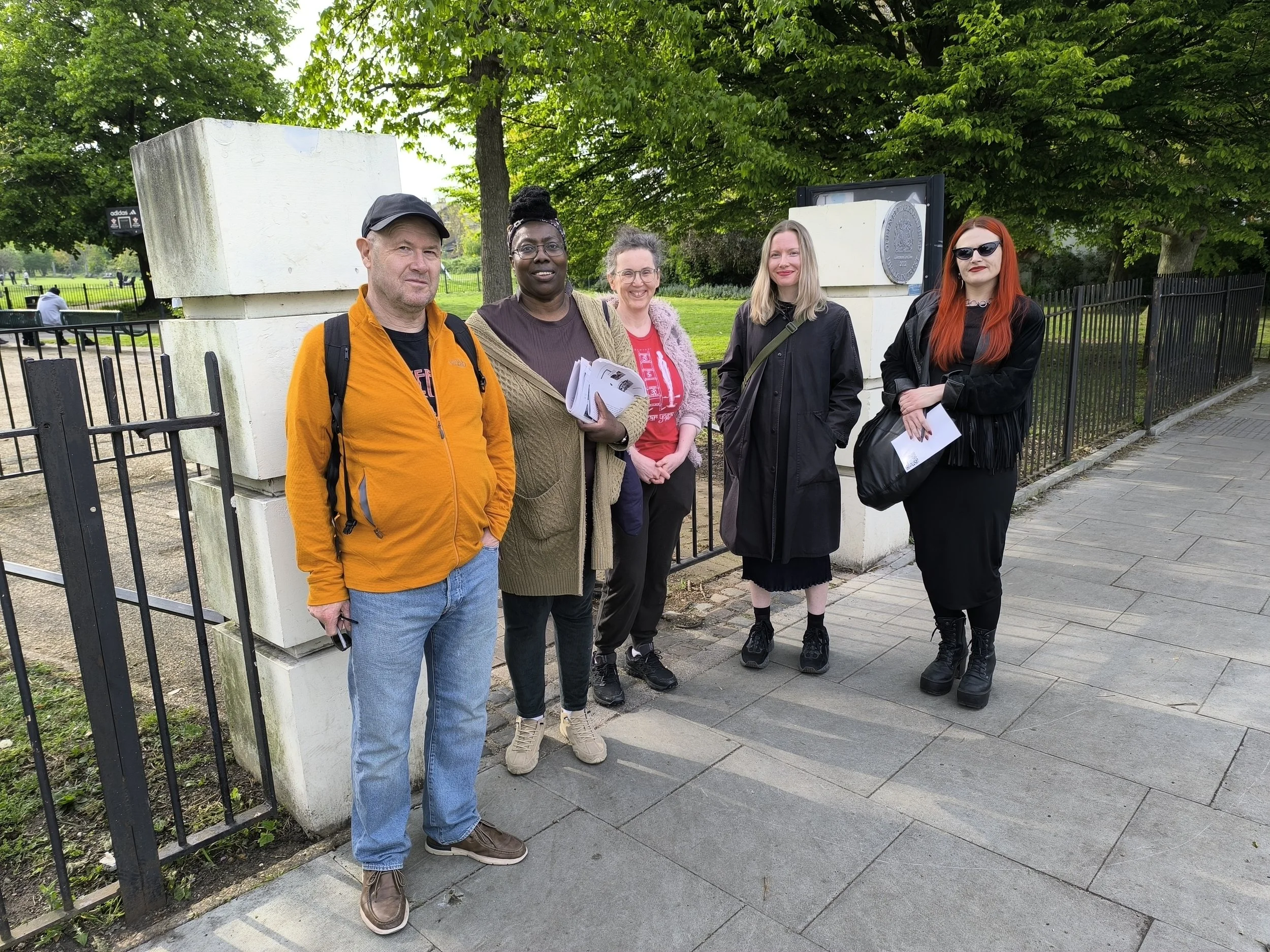
Warwick Gardens, Lyndhurst Way entrance, SE15 5QA. Photo courtesy of Laure De Tymowski
At this stop, I spoke about Warwick Gardens and how it was frequented by the Caribbean community as a safe space to socialise: my research participants discussed the fact that in the 1960s and early 1970s the community lived in shared accommodation which afforded too little private space for socialising. At that time Warwick Gardens contained fruit trees and gravestones.
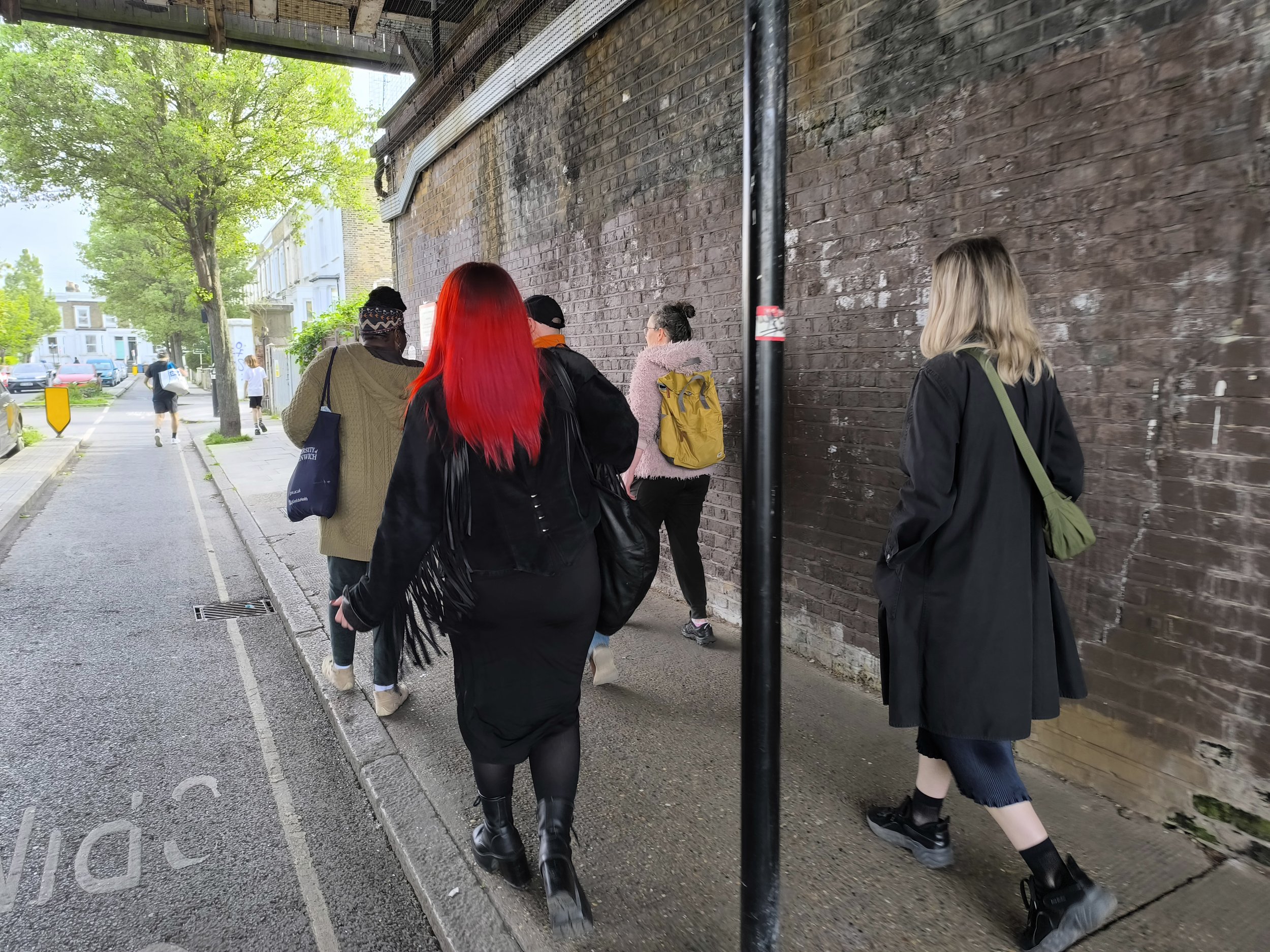
Lyndhurst Way, towards Chadwick Road, SE15 4PU. Photo courtesy of Laure De Tymowski
As the group walked along Lyndhurst way, I presented the history of the occupants of the many large houses in Lyndhurst Way, Lyndhurst Road, and Chadwick Road, formerly owned by private landlords. This talk highlighted the sizeable number of Caribbean families who rented rooms, and shared bathrooms and kitchens. I disclosed the cottage industries operating in these residences, as the families applied their skills to generate income.
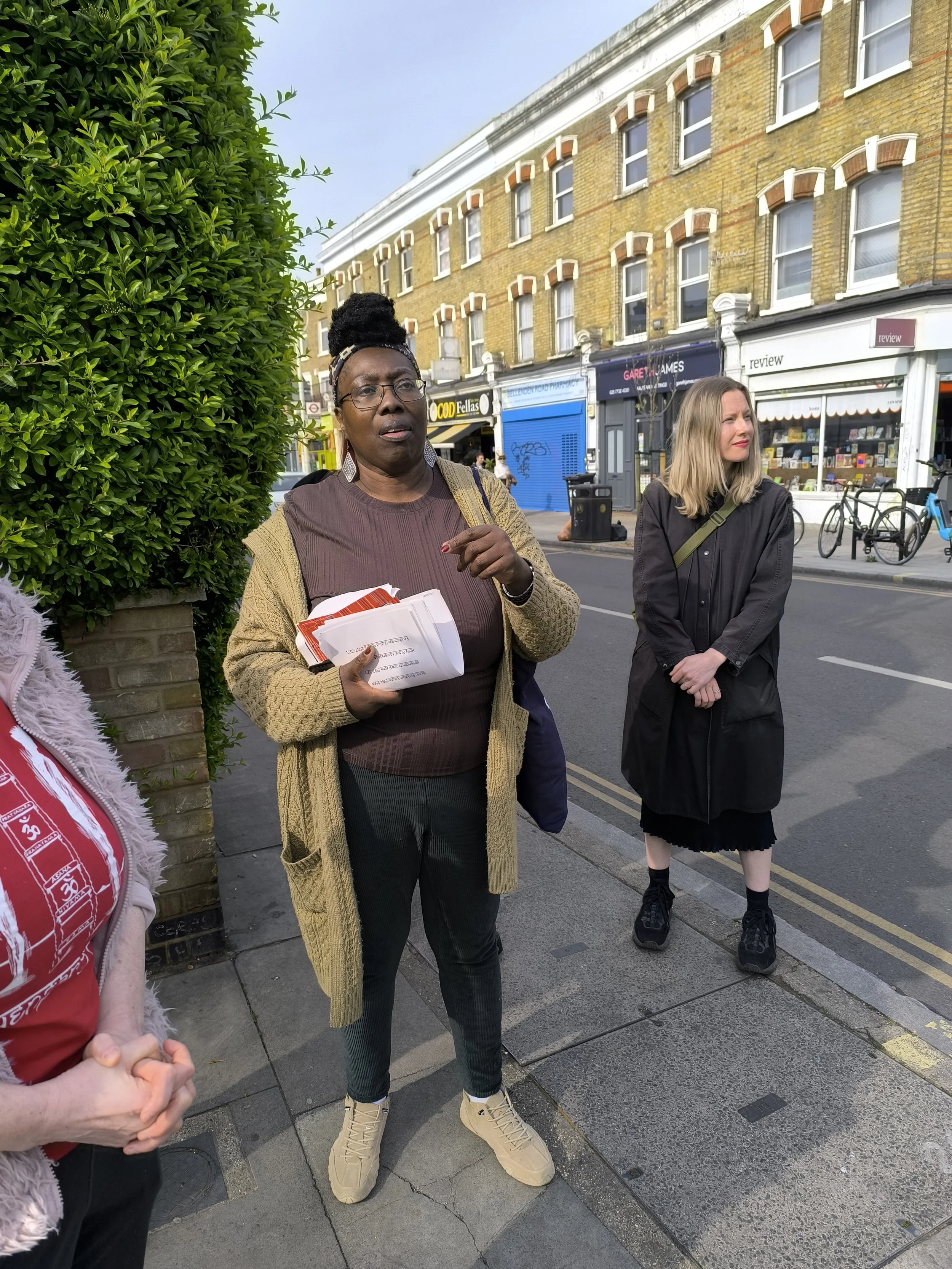
Bellenden Road, SE15 4DH. Photo courtesy of Laure De Tymowski
At this stop, I highlighted the now lost numerous businesses owned and operated by the Caribbean community on Bellenden Road: a shoemaker, two greengrocers, a restaurant, a takeaway, a mini-cab office, a motor mechanics, a pub, and several barbers, dressmakers and hairdressers. I discussed the current businesses (for example, a delicatessen and a vintage store) attracting a different genre of clientele (for example, predominantly White middle-class).
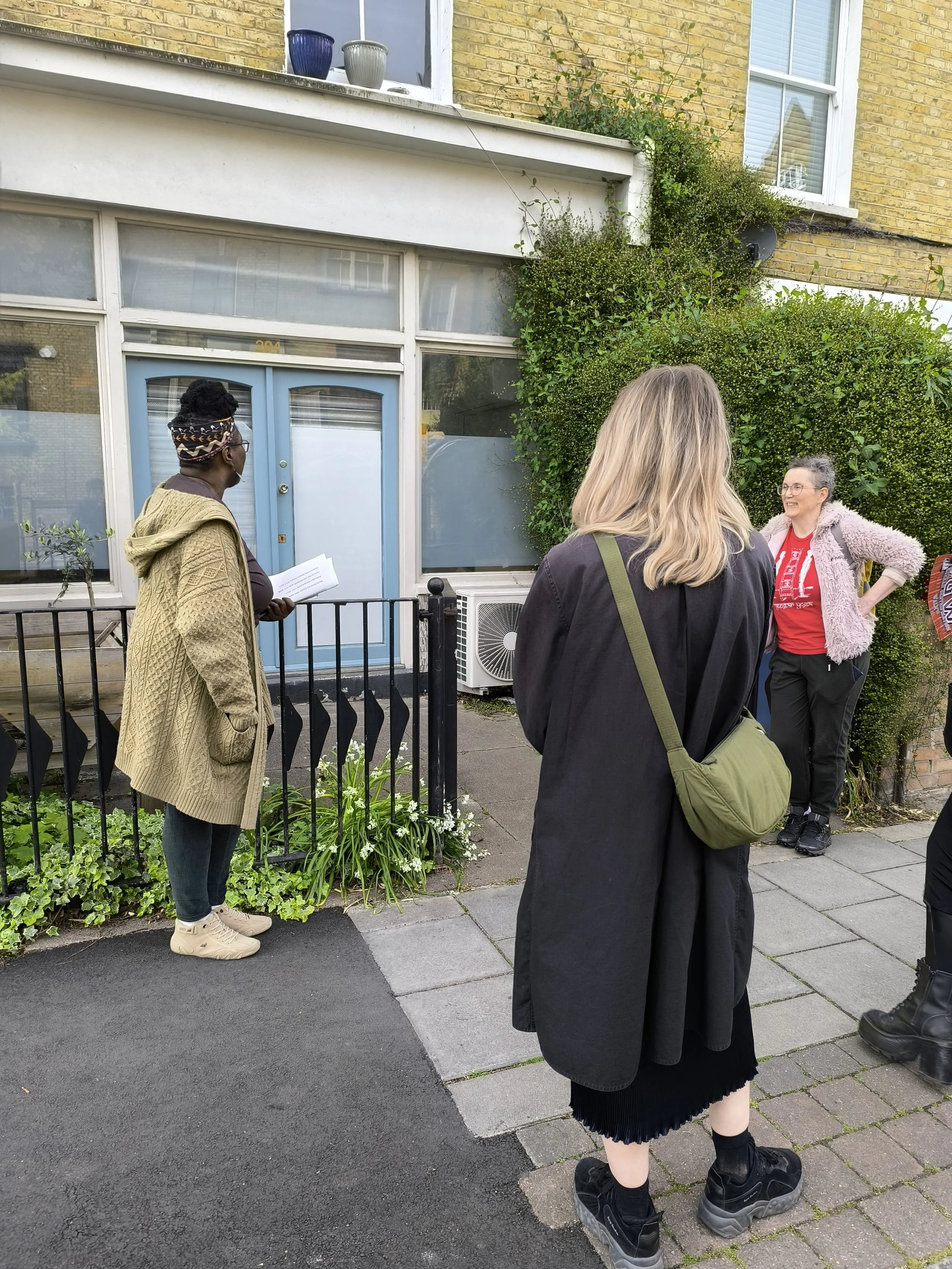
204 Bellenden Road, SE15 4BW Photo courtesy of Laure De Tymowski
The last stop on the tour was at 204 Bellenden Road, the location for the Channel 4 television series Desmond’s (1989-1994) featuring a Guyanese barber Desmond played by actor Norman Beaton. I spoke briefly about the owner Lloyd, a Jamaican barber who managed the business during the filming of the TV series. I shared my encounters with the cast during rehearsals. I also discussed how Lloyd’s Barber shop served as an effective community hub.[8]
The University of the Arts London (UAL) Foundation Art degree ‘Portraits of Peckham’ project, 11th October 2023
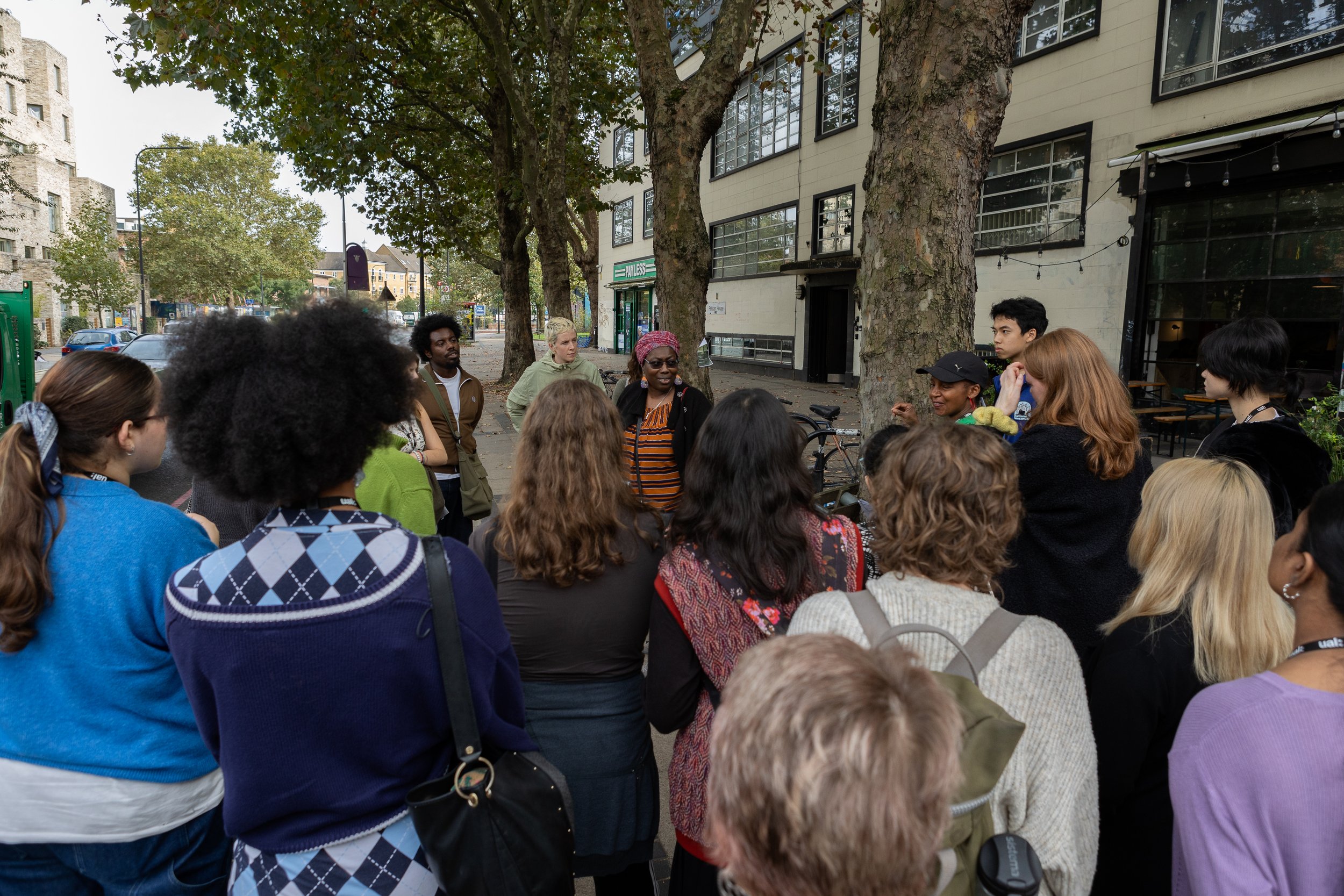
Former Kennedy’s sausage shop, Peckham Road, SE15 5PY. Photo courtesy of India Maeal https://www.instagram.com/indiamaealbyevents
The tour started with a discussion on the distinct phases of urban regeneration particularly the North Peckham Estate (1997-2007) located opposite. I shared Peckham’s history and changing communities 1960 to 1990. I presented UAL students with a broader perspective of Peckham’s multicultural history. I encouraged the art students to incorporate relevant aspects of the tour in their ‘Portraits of Peckham’ foundation degree project portfolio. This tour culminated in a public exhibition in Peckham Levels art space.
The National Youth Theatre (NYT), 6th March 2023
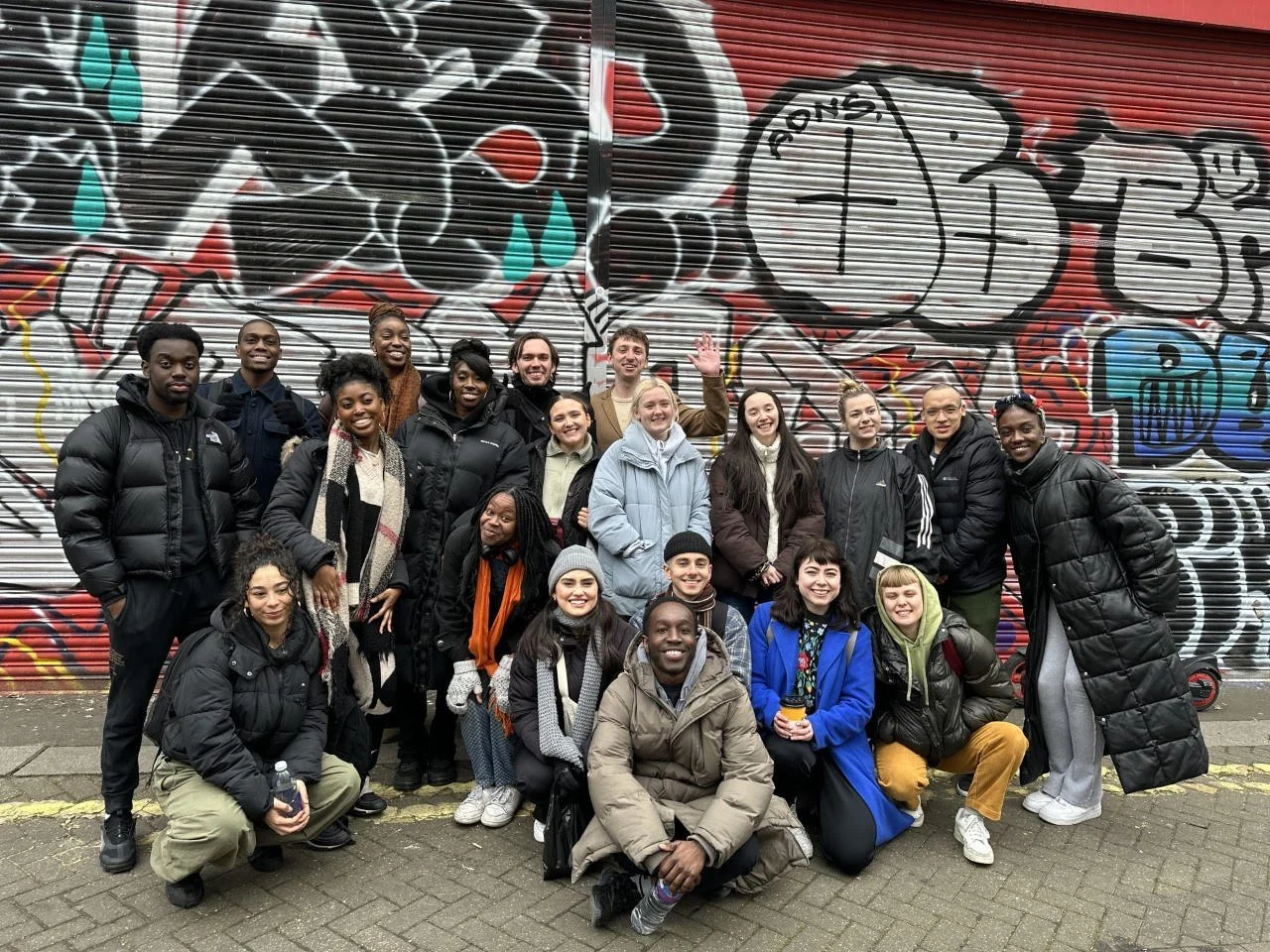
Hannah Barry Gallery, 4 Holly Grove, SE15 5DF. Photo courtesy of Naila Barrett
The focus of this walking tour contextualised the effects of gentrification on Peckham. In my role as NYT Education Consultant, I presented the director and cast with an authentic perspective on urban regeneration, gentrification and changes impacting different communities. The walking tour insights were discussed and applied in the updated version of the NYT play ‘Gone Too Far’ staged at the Hackney Empire in 2023.
Conclusion
The Gentrification and African Presence in Peckham walking tour presents a momentous gap in the social history of Peckham between 1960 and 1990. The Windrush generation has made significant contributions to the development of the UK which should not be overlooked. My research focused on Caribbean immigrants who settled in an area which experienced widespread regeneration in the Bellenden Road renewal zone between 1997 and 2007.
During the period of my research, Bellenden Road and adjoining streets were inhabited by a sizeable Caribbean community who bought properties and businesses in the area. Research participants suggested many reasons for subsequent displacement including the Compulsory Purchase Act 1965 and the sus law. The compulsory purchase order granted local authorities absolute power to repossess properties, leaving affected parties with no grounds for appeal. The implementation of the sus law witnessed an increase in police harassment of the Caribbean community. Police had the power to stop, search, and arrest individuals they suspected of loitering with intent to commit a crime.[9] These and other factors impacted the Caribbean community who experienced displacement both physically and mentally.
The walking tour brings to life those spaces from 1960 to 1990 at the peak of Caribbean immigration. Sights, smells, and sounds are revisited. It further highlights the gaps in Peckham’s local history, most importantly the omission of contributions to the cultural and social capital of the Caribbean community in local historical publications. The tour presents a reminder of the impact of gentrification and displacement of the Caribbean community.
Notes
1. Eisa, A; Murdoch, L (Autograph), Sturgis, D; Odjidja, R and Ince-Mitchell, Jerome (UAL); Vickers, H; Lucien, S’ Ebongue and Crook, P. (South London Gallery) (2023) The Politics of Art & Social Change: Rights in Focus Conference. https://autograph.org.uk/events/rights-in-focus-conference-2023
2. Agbaje, B (2023) Gone Too Far. https://www.nyt.org.uk/get-tickets/2023/gone-too-far; https://qualifications.pearson.com/content/dam/pdf/GCSE/Drama/2016/teaching-and-learning-materials/GCSE-Drama-Gone-Too-Far-guide-issue-1.pdf . (Play at National Youth Theatre /GCSE English text)
3. Bertram S (2023) Portraits of Peckham. University of the Arts London. https://www.arts.ac.uk/students/stories/why-the-world-needs-creativity-a-case-study-of-the-portraits-of-peckham-exhibition
4. Vaughan, LM (2020) Participatory Research Methods. https://jprm.scholasticahq.com/article/13244-participatory-research-methods-choice-points-in-the-research-process
5. Bourdieu, P (1986) ‘The Forms of Capital.’ pp. 241-258 in Handbook of Theory and Research for the Sociology of Education, edited by J. G. Richardson. New York: Greenwood Press
6. Beasley J (1995) Peckham and Nunhead: Images of London. The History Press; Beasley J (2009) Peckham & Nunhead Through Time. Amberley Publishing
7. South London Guide: A timeline history of Peckham illustrated with prints, photographs and maps; The Peckham Society: Honouring the past, protecting the future. https://www.peckhamsociety.org.uk/
8. Brown C (2021) Lloydie's |The real-life Desmond's, https://www.communitybridges.co.uk/post/lloydie-s-the-real-life-desmond-s; Brown C (2022) ‘The fate of the ‘real’ Desmond’s of Peckham is a classic example of what gentrification means for the community’, Southwark News http://www.southwarknews.co.uk/news/the-fate-of-the-real-desmonds-of-peckham-is-a-classic-example-of-what-gentrification-means-for-the-community-says-senior-lecturer/
9. https://irr.org.uk/article/fighting-sus-then-and-now/
Bio
Dr Charmaine Brown, Academic, researcher and community activist, is an expert on gentrification and displacement in Peckham. Her research reflects the lived experiences of the Caribbean Community between 1960-1990.
Appendix 1